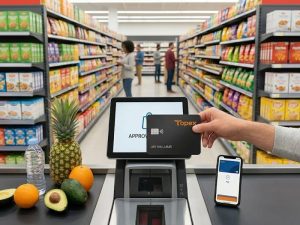

Crypto card benefits go far beyond simple payments, offering users a practical way to turn digital assets into real-world spending power while unlocking rewards, global accessibility, and financial flexibility. Instead of manually converting crypto into fiat before every transaction, a crypto card allows instant spending with automatic conversion at the point of sale, making everyday use of digital assets seamless and efficient.
In this article, we’ll explore the most important crypto card benefits, including real-world usability, reward systems, cross-border payments, security features, and the trade-offs behind different card models. You’ll also see how factors like volatility, fees, and tiered rewards impact your overall financial strategy, and why understanding these benefits is essential before choosing the right crypto card.
Key Takeaways:
- A crypto card automatically converts digital assets into fiat at the moment of purchase, allowing users to spend crypto without manual exchange steps or pre-conversion.
- Crypto debit cards spend directly from your wallet balance, while crypto credit cards extend a credit line and may offer crypto-based rewards with different risk structures.
- Real-time conversion makes crypto usable for everyday spending, but exposes users to opportunity cost and price volatility depending on the asset used.
- Stablecoins like USDT or USDC are commonly used to reduce volatility risk and provide predictable spending power within crypto card systems.
- Many crypto cards include tiered reward systems, where higher staking levels unlock better cashback rates but often come with caps, lock-ups, and exclusions.
- Global usability is a key advantage, as crypto cards support cross-border payments, multi-currency conversion, and reduced reliance on traditional banking systems.
- Security features such as encryption, spending controls, and custodial vs non-custodial structures significantly impact how much control users retain over their assets.
What Is a Crypto Card and How Does It Work?
A crypto card is a payment instrument, available in physical or virtual form, that lets users spend their digital asset holdings at any merchant accepting Visa or Mastercard, without manually converting crypto to fiat beforehand. The card connects to a user’s crypto wallet or exchange account. When a purchase is made, the provider’s system automatically converts the required amount of digital assets into local fiat currency at the current market rate. The merchant receives standard fiat; they never interact with the blockchain at all.
Understanding this mechanic is the foundation for understanding every benefit that follows. If you’re new to the concept, the article “What is a crypto card?” covers the full fundamentals in detail.
Crypto Debit Card vs Crypto Credit Card
Not all crypto cards work the same way. The two main types, debit and credit, have fundamentally different financial structures, and understanding the difference directly affects which benefits you can access.
A crypto debit card is funded directly from your wallet or exchange balance. At the point of sale, the required crypto is converted to fiat in real-time. You spend what you have. A crypto credit card works more like a traditional credit line: you spend fiat and repay monthly, but instead of airline points, rewards are paid in cryptocurrency. Some versions use crypto as collateral to back a credit line, typically maintaining a loan-to-value (LTV) ratio of around 50% to manage volatility risk.
Collateralized credit cards add an important risk layer: if the value of your collateral drops significantly, the provider may require top-ups or liquidate your assets to restore the required ratio. Traditional crypto credit cards with crypto rewards, but no collateral, carry no such risk. For a full side-by-side breakdown, the difference between a crypto credit and a crypto debit card covers both models in detail.
Real-World Spending Power for Digital Assets
The most fundamental advantage of crypto cards is the ability to spend digital assets as easily as traditional currency. Users no longer need to manually convert crypto to fiat before making purchases, which streamlines both online and offline transactions.
Crypto cards allow payments at physical stores, restaurants, online shops, travel services, and subscription platforms. For many users, this represents the first opportunity to use digital assets without complex exchange procedures. Additionally, real-time conversion ensures that spending aligns with the current market value of assets, minimizing unnecessary losses due to volatility.
Beyond convenience, this real-world usability enables asset liquidity, turning what was previously an investment into a functional tool for daily life. Users can allocate assets for specific spending categories, making it easier to manage personal finances alongside digital investments.
Key points:
- Direct spending at retail and online merchants without manual conversion
- Support for contactless and recurring payments
- Real-time conversion reflecting current asset value
- Flexibility in spending multiple digital assets depending on the card
Practical insight: Integrating crypto cards into budgeting strategies allows users to track spending in both fiat and digital terms, providing a clearer picture of financial health.
For detailed guidance on everyday usage, including how to use a crypto card for in-store payments at shops and restaurants, as well as for online purchases, this guide provides a practical step-by-step reference.
Earn Rewards on Everyday Spending
Rewards are one of the biggest incentives behind the growing adoption of crypto cards. Instead of standard cashback, users can earn staking-based or asset-backed bonuses that may increase in value over time. These benefits often come in the form of points, bonus tokens, or percentages of digital assets across spending categories like dining, travel, and retail. For anyone curious about how crypto card rewards can enhance everyday spending, the experience offers both instant perks and long-term growth potential.
Key points:
- Earn rewards in crypto or digital points convertible to assets
- Staking multipliers increase rewards for long-term holders
- Bonus incentives for partner merchants and specific spending categories
- Rewards may compound alongside asset growth
Practical insight: Strategically using reward programs for recurring expenses like groceries or subscriptions can maximize value while aligning with asset growth goals.
How Crypto Card Reward Tiers and Staking Really Work
Most crypto card reward programs are tier-based. The more you stake or hold a platform’s native token, the higher your cashback rate. Here’s what to know before optimizing for a headline percentage:
- Tiers are typically unlocked by staking a platform token for 6–12 months at a specified minimum. Higher tiers can require locking significant amounts, sometimes in the range of hundreds of thousands of dollars in tokens.
- Monthly reward caps apply. A card advertising 8% cashback may cap monthly rewards at a fixed dollar value, meaning the effective rate drops for heavier spenders.
- Exclusions are common. Cash-like transactions, gambling, and certain merchant categories are frequently excluded from reward accrual.
- Reward timing varies. Some cards pay per transaction; others batch monthly. The payout asset varies too, often a platform token, not necessarily Bitcoin or Ethereum.
- Volatile reward assets carry downside risk. If your cashback is paid in a token that drops significantly before you use it, your effective reward rate drops with it.
The practical check: estimate your monthly spend, apply the capped reward rate, then subtract any staking lock-up costs or subscription fees to calculate your actual net benefit, not the headline percentage.
Seamless Online Payments and E-Commerce Support
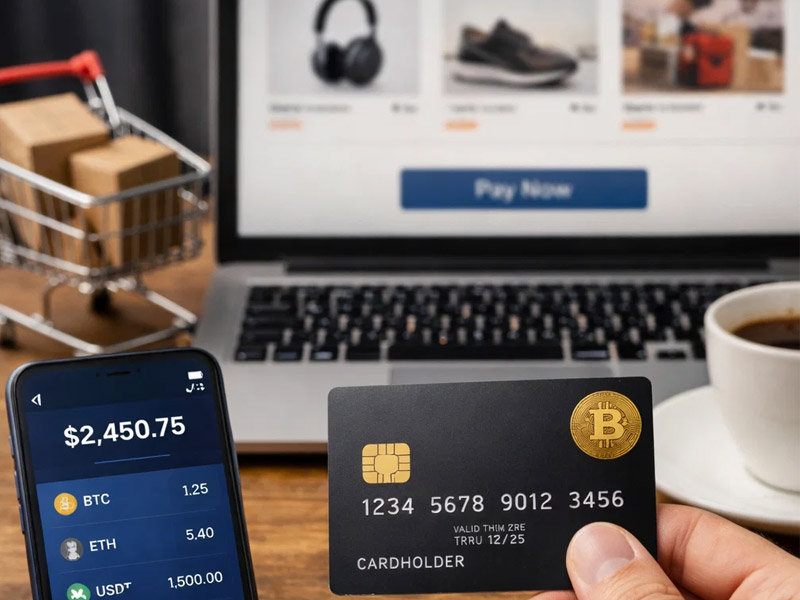
One of the most compelling benefits of crypto cards is their efficiency in online commerce. Users can pay directly on e-commerce platforms without the need to manually convert crypto to fiat. This is particularly beneficial for global purchases, subscription services, and digital goods.
By reducing transaction steps, crypto cards save time and lower the risk of conversion errors. Many platforms, including Topex, guide how to use a crypto card in online shops, making digital assets practical for daily online spending.
Key points:
- One-step payment with automatic conversion
- Compatible with subscription and e-commerce platforms worldwide
- Reduces delays and currency exchange errors
- Centralized transaction management via mobile apps
Practical insight: For frequent online shoppers, using a crypto card for recurring purchases ensures seamless payment and automatic reward accrual.
Instant Conversion and Flexible Top-Ups
Crypto cards offer instant asset conversion, allowing for real-time spending without market timing concerns. Users can top up their cards with multiple digital assets, and the platform automatically handles conversions for purchases.
This flexibility also supports budgeting strategies: users can allocate funds to specific spending categories or currencies, adjusting balances as needed. Some platforms allow both crypto and fiat top-ups, further enhancing accessibility.
Key points:
- Instant conversion ensures asset liquidity
- Multi-asset top-up support for greater flexibility
- Real-time balance management via app
- Reduces exposure to asset volatility during transactions
Practical insight: Users can use instant conversion strategically to lock in asset value for planned travel or large purchases, minimizing potential losses from market fluctuations.
Spending Crypto Without Losing Value and the Stablecoin Fix
Spending Bitcoin or Ethereum directly from your balance means the crypto amount debited changes with every transaction, depending on the current market price. A $50 purchase costs fewer satoshis when Bitcoin is at $100,000 than when it’s at $60,000. This creates two real considerations:
- Opportunity cost. If you spend an asset that subsequently appreciates significantly, you’ve effectively paid more for that purchase in hindsight, a genuine downside for long-term holders.
- Budget unpredictability. Your effective spending power in crypto terms fluctuates with market conditions, making fixed-budget planning harder.
The Stablecoin Solution:
The most practical mitigation is funding your card with stablecoins, USDT, USDC, or EURC, which maintain near-parity with fiat. This approach:
- Eliminates price volatility between load and spend
- Preserves your core crypto holdings for long-term appreciation
- Simplifies record-keeping since conversion gains and losses are negligible
- Keeps all the infrastructure advantages of crypto cards: instant conversion, low fees, and global access
Many sophisticated users maintain their investment positions in Bitcoin or Ethereum, allocate a portion to stablecoins for spending, and run day-to-day expenses entirely through the stablecoin balance. This is the cleanest way to use crypto card infrastructure without disrupting a long-term investment strategy. To understand how the conversion mechanics work in practice, how to convert crypto to fiat is a useful reference.
Global Usage and Cross-Border Convenience
Crypto cards are ideal for travelers, remote professionals, and international shoppers. Users can spend in multiple currencies without the need for pre-conversion or worrying about foreign exchange fees. This advantage is particularly relevant in regions with high FX costs or limited banking infrastructure.
Global usability simplifies financial management and expands the practicality of digital assets, making crypto cards a viable alternative to traditional travel or international debit cards
Key points:
- Automatic multi-currency conversion for international spending
- Reduced cross-border transaction fees
- Simplified travel and accommodation payments
- Integrated with global online and offline merchants
Practical insight: Travelers can budget using crypto cards in their home currency while spending abroad, avoiding surprise charges and maximizing value from digital assets.
For users planning extended international use, buying a crypto card for travel covers the key factors to consider when selecting the right card for cross-border spending.
Lower Transactional Friction and Transparent Fees
Traditional payment systems often involve hidden fees, including international usage charges, exchange markups, and ATM withdrawal costs. Crypto cards reduce these frictions by offering transparent pricing and efficient settlement mechanisms.
Users benefit from predictable costs, faster processing, and fewer intermediaries, which improves overall financial planning.
Key points:
- Clear fee structures for spending and withdrawals
- Minimal or no foreign transaction fees
- Faster settlements than traditional banking methods
- Easier cross-border fund transfers
Practical insight: Users can calculate monthly spending more accurately and avoid unexpected costs by reviewing the fee structure of their crypto card.
For a structured breakdown of what to look for, a crypto card with low fees covers the full fee landscape, including conversion spreads, ATM limits, and subscription costs, in detail.
Advanced Security and Asset Management
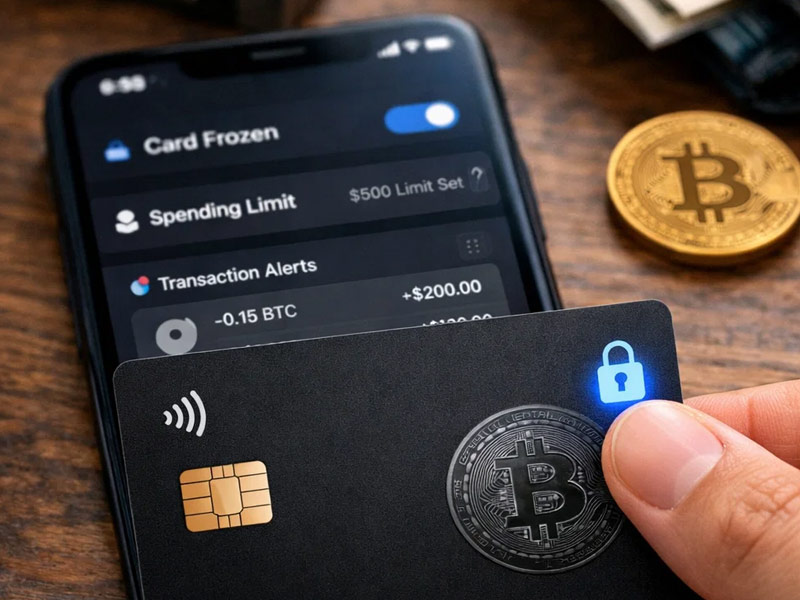
Security is a critical feature of crypto cards. Most platforms incorporate multi-factor authentication, transaction alerts, and app-based spending controls, ensuring users can monitor and manage their assets in real time.
Advanced security reduces the risk of fraud and unauthorized spending, while optional custody integration provides further control over asset ownership.
Key points:
- Freeze/unfreeze card functionality
- Spending limits per merchant or category
- Real-time transaction notifications
- Optional custody for enhanced asset protection
Practical insight: Regularly updating security settings and using app alerts ensures proactive management of both spending and asset safety.
Virtual Crypto Cards: Instant Access and Digital Wallet Integration
Virtual crypto cards are one of the most underappreciated benefits in the category. Unlike physical cards that require 7–10 business days for delivery, virtual cards can be issued immediately after account verification is complete.
Once issued, a virtual card can be added directly to Apple Pay or Google Pay for contactless payments, both in-store and online. This makes the card immediately usable without waiting for anything to arrive by mail.
Virtual cards also offer a meaningful security advantage: many providers generate transaction-specific card numbers that expire after a single use, or allow users to create multiple virtual cards for different spending purposes. This tokenization approach means a merchant data breach cannot expose your primary payment credentials.
- Instant issuance after KYC verification, no waiting period
- Full Apple Pay and Google Pay compatibility for contactless use
- Single-use or limited-use virtual card numbers for enhanced security
- Manage balance, transaction history, and security settings entirely in-app
- Issue multiple cards for different spending purposes from one account
Custodial vs Non-Custodial Crypto Cards: Why It Matters
Most crypto cards on the market are custodial, meaning the provider holds your assets on their platform until you spend them. Your balance lives on an exchange or centralized wallet. This is convenient, but it introduces real platform risk.
With a custodial card, if the platform experiences a security breach, regulatory freeze, or insolvency event, your funds are exposed. This is not a theoretical concern; it has played out across multiple centralized platforms in recent years.
Non-custodial crypto cards solve this problem by connecting directly to self-custody wallets. The provider has zero access to your funds at any point except during an actual transaction. You retain 100% ownership of your assets at all times.
The trade-off is usually a slightly more involved setup and occasionally fewer reward options. But for users holding significant balances, the protection is a meaningful difference.
Earn Staking or Yield on Held Assets
Some crypto cards offer yield or staking opportunities for users who maintain balances or stake digital assets. This allows assets to continue generating value while remaining accessible for spending.
This combination of liquidity and growth potential is unique to crypto cards and provides a compelling alternative to traditional debit or credit card rewards.
Key points:
- Rewards increase for staked or held assets
- Compounded value for long-term cardholders
- Integration with platform-specific staking programs
- Enhanced benefits for high-volume or frequent users
Practical insight: Users can align their spending and staking strategies to optimize both immediate usability and long-term growth.
For users looking to go beyond card-based earning, the article “How to make passive income with crypto” explores the full range of yield strategies available across the broader crypto ecosystem.
Financial Independence and Banking Optionality
Crypto cards reduce dependency on traditional banking systems. This is valuable for users with limited access to credit or banking services, as well as remote professionals who require global financial mobility.
Key insights:
- Ability to transact globally without opening multiple bank accounts
- Avoid reliance on local credit scoring systems
- Ideal for freelancers, digital nomads, and international workers
- Supports budgeting and asset management independent of banks
Practical insight: Combining crypto card usage with digital wallets and budgeting apps can create a self-sufficient financial ecosystem.
Who Benefits Most from a Crypto Card?
Crypto card benefits aren’t equally distributed across all user types. The advantages compound significantly for specific profiles:
- International travelers: Spend across multiple countries without repeated currency conversion, ATM fees, or foreign transaction charges, one card, one balance, global reach.
- Freelancers and remote workers paid in crypto: Convert earnings to spending power instantly, without selling through an exchange, waiting for bank transfers, or losing value to multi-step conversion fees.
- Long-term investors: Use a stablecoin-funded card for day-to-day expenses while keeping core BTC or ETH positions untouched and accumulating.
- Underbanked or unbanked users: Crypto cards require significantly less documentation than traditional credit cards and offer global payment functionality without needing a local bank account.
- Active traders: Immediately convert trading profits into a spendable form without routing through a bank transfer process.
The common thread across all these profiles: anywhere traditional banking infrastructure adds friction, delays, or high cost, a crypto card adds measurable, practical value.
Ecosystem Perks and Lifestyle Benefits
Beyond basic functionality, crypto cards often include partner discounts, subscription rebates, and lifestyle rewards, enhancing their value proposition. Users can enjoy perks aligned with real-world habits, from dining and travel to online services.
Key points:
- Merchant-specific discounts and loyalty rewards
- Subscription rebates for digital platforms
- Travel, dining, and entertainment incentives
- Integrated reward systems for frequent usage
Practical insight: Structuring spending around reward categories maximizes benefits, particularly when combined with staking or asset-backed reward programs.

Why Topex Card Is Your Ultimate Crypto Companion
The Topex Card is designed to make everyday spending with digital assets simple, fast, and effortless. With Topex, you can spend your crypto directly in daily life without the need for manual conversion to fiat or relying on exchanges, whether online or in-store.
It offers full transparency with no hidden fees, and account top-ups are completely free. Getting started is quick and easy, with a fast KYC process and a card issuance fee of just $1, so you can activate your card and begin spending in minutes.
Built for global use, the Topex Card is accepted at millions of POS terminals and online payment gateways worldwide. You can also use TopexCard with Apple and Google Pay, making contactless and mobile payments smooth and seamless wherever you go.
Security is a core part of the experience, with advanced encryption protecting every transaction and 24/7 customer support ensuring you always have assistance when you need it. Whether you’re traveling, shopping online, or managing everyday expenses, Topex gives you a secure, borderless, and truly modern way to use your digital assets.
Final Thoughts on Crypto Card Benefits
Crypto cards have evolved into a practical financial layer between digital assets and real-world spending. They eliminate the friction of manual conversions and make crypto usable in everyday commerce, from online subscriptions to international travel. At the same time, their structure, whether debit, credit, custodial, or non-custodial, directly shapes the level of risk, control, and flexibility users experience.
The key to using crypto cards effectively lies in understanding the trade-offs. Features like rewards, global access, and instant conversion are powerful, but they only deliver real value when aligned with a clear strategy for managing volatility, fees, and long-term holdings. For users who approach them with this awareness, crypto cards become less of a payment tool and more of a financial control system for the digital asset era.
Key Questions About Crypto Card Benefits
Is a Crypto Card Worth It?
Yes, a crypto card can be worth it if you want to use your digital assets for everyday spending, earn rewards, and enjoy seamless online and international transactions. Platforms like Topex make it even more convenient with multi-currency support and robust rewards.
Can I Withdraw Money From a Crypto Card?
Yes, most crypto cards allow cash withdrawals from ATMs. Withdrawals are usually converted from your crypto balance to fiat, and fees may apply depending on the card and ATM used.
Can I Use a Crypto Card for Subscriptions?
Absolutely. Crypto cards can handle recurring payments and subscriptions just like traditional cards, with automatic conversion to fiat if needed.
Can I Use a Crypto Card for Online Shopping?
Yes, crypto cards are designed for seamless online payments and support most e-commerce platforms, allowing automatic conversion from crypto to fiat at checkout.
What is the difference between a custodial and a non-custodial crypto card?
A custodial card holds your assets on the provider’s platform until you spend them, introducing platform risk. A non-custodial card connects directly to your own wallet, so you retain full ownership at all times. Non-custodial cards are better suited for users holding significant balances who want to eliminate third-party custody risk.
Is it better to fund a crypto card with Bitcoin or a stablecoin?
For most everyday spending, funding with a stablecoin like USDT or USDC is more practical. It eliminates price volatility, makes budgeting predictable, and preserves your core crypto holdings for long-term appreciation. Bitcoin funding makes sense if you want to reduce a specific position or are comfortable with variable spending costs.