

In today’s evolving financial landscape, knowing how to convert crypto to local currency online is no longer a niche skill; it’s a necessity. Whether you’re an investor cashing out profits, a freelancer receiving payments in digital assets, or simply someone looking to spend crypto in everyday life, understanding the conversion process is crucial.
This guide is written from an expert perspective to give you a clear, practical, and secure path to converting cryptocurrency into fiat money online. We’ll walk through the methods, tools, risks, and best practices, so you can make informed decisions and avoid costly mistakes.
What Does Converting Crypto to Local Currency Mean?
Converting crypto to local currency refers to the process of exchanging digital assets such as Bitcoin, Ethereum, or stablecoins into traditional fiat currencies like USD, EUR, or your local currency. This transformation enables you to use your funds in everyday financial systems, including bank withdrawals, payments, and purchases.
At its core, this process involves selling your crypto on a platform or service that supports fiat payouts. The platform acts as an intermediary, matching your crypto with buyers or liquidity pools and providing the equivalent fiat value based on current market rates.
Understanding this concept is essential because the conversion is not just a transaction, it’s influenced by market volatility, fees, liquidity, and the method you choose.
Supported Methods for Converting Crypto to Fiat Online
There are several reliable ways to convert cryptocurrency into local currency online, each with its own advantages and limitations.
The most common method is using centralized exchanges. These platforms allow users to sell crypto and withdraw fiat directly to a bank account. They are user-friendly and widely trusted, making them ideal for beginners.
Another option is peer-to-peer (P2P) platforms. These connect buyers and sellers directly, often allowing more flexibility in payment methods and pricing. However, they require more caution and due diligence.
Crypto payment platforms and financial services also offer conversion features. Some even integrate with modern tools like a crypto debit card, enabling seamless spending without manually converting funds.
Finally, crypto cards and fintech solutions are gaining popularity because they eliminate the need for manual conversion. Instead, they handle conversion automatically at the point of transaction.

Step-by-Step Guide to Convert Crypto to Local Currency
To successfully convert crypto to fiat, follow these steps:
- Choose a Trusted Platform
Select a reputable exchange or service that supports your desired currency and withdrawal method. - Create and Verify Your Account
Most platforms require identity verification to comply with regulations. - Deposit Your Cryptocurrency
Transfer your crypto from your wallet to the platform. - Sell Your Crypto
Place a market or limit order to convert your crypto into fiat. - Withdraw Funds
Transfer the fiat balance to your bank account or preferred payment method.
Each step must be executed carefully to avoid errors, especially when transferring funds. Double-check wallet addresses and transaction details before confirming.
How Crypto Debit Cards Enable Instant Conversion
One of the most efficient ways to convert crypto to fiat is with a crypto debit card. Instead of manually selling your assets, these cards automatically convert crypto into local currency at the time of purchase.
This approach simplifies the entire process and is particularly useful for everyday spending. Understanding what a crypto card is helps clarify its role: it acts as a bridge between digital assets and real-world payments.
A modern solution like Topex takes this concept further by combining convenience with rewards. Users can fund their card with crypto and spend globally while earning points or cashback on transactions. This eliminates the need for separate conversion steps and enhances usability.
Beyond convenience, there are clear crypto card benefits, including real-time access to funds, simplified budgeting, and integrated reward systems. However, before using one, it’s important to understand crypto card requirements, such as identity verification and supported cryptocurrencies.
Fees Involved in Crypto to Fiat Conversion
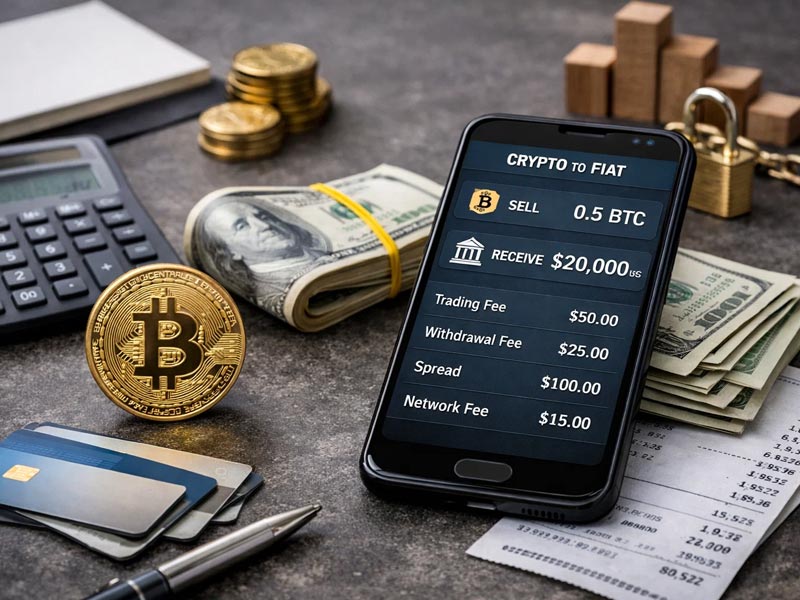
Every conversion method comes with associated costs, and understanding them is critical for maximizing your returns.
Typical fees include:
- Trading Fees: Charged when you sell crypto on an exchange
- Withdrawal Fees: Applied when transferring fiat to your bank
- Spread: The difference between buy and sell prices
- Network Fees: Paid when transferring crypto on the blockchain
Some platforms offer lower fees but compensate with wider spreads. Others may provide transparent pricing structures, allowing you to see what you’re paying clearly. Choosing a service with clear and predictable fees is essential, especially if you convert frequently.
Processing Time: How Long Does It Take?
The time required to convert crypto to local currency varies depending on the method used.
- Exchanges: Typically take a few minutes for the trade, but withdrawals may take 1–3 business days
- P2P Platforms: Can be instant or take several hours, depending on the buyer
- Crypto Cards: Offer near-instant conversion at the point of sale
Processing time also depends on blockchain confirmation speeds and banking systems. If speed is a priority, solutions that enable real-time conversion, such as crypto cards, are often the most efficient.
Limits and Restrictions You Should Know
Most platforms impose limits on how much you can convert or withdraw. These limits depend on factors such as account verification level, geographic location, and regulatory requirements. Common restrictions include:
- Daily or monthly withdrawal caps
- Minimum transaction amounts
- Currency availability based on region
Understanding these limitations beforehand can help you plan your transactions more effectively and avoid unexpected delays.
Security Considerations When Converting Crypto Online
Security is one of the most critical aspects of converting crypto to fiat. Since you’re dealing with digital assets and financial accounts, any vulnerability can lead to significant losses. Best practices include:
- Using platforms with strong security protocols
- Enabling two-factor authentication (2FA)
- Avoiding public Wi-Fi during transactions
- Verifying URLs to prevent phishing attacks
Additionally, always store your crypto in secure wallets before initiating conversions. The safer your assets are, the lower your risk during the process.
Common Mistakes to Avoid During Conversion
Even experienced users can make mistakes when converting crypto. Some of the most common include:
- Sending crypto to the wrong address
- Ignoring fees and ending up with less fiat than expected
- Choosing unreliable platforms
- Converting during high volatility without planning
Avoiding these mistakes requires patience, attention to detail, and a solid understanding of the process.
Tips to Get the Best Exchange Rate
Getting the best value when converting crypto requires a strategy. Here are some expert tips:
- Monitor Market Trends: Convert when prices are favourable
- Use Limit Orders: Avoid selling at unfavourable market prices
- Compare Platforms: Different services offer different rates
- Avoid Peak Network Times: Lower congestion can reduce fees
Timing and platform selection play a significant role in maximizing your returns.
Conclusion
Understanding how to convert crypto to local currency online empowers you to use your digital assets in the real world efficiently and securely. From exchanges and P2P platforms to advanced tools like crypto debit cards, there are multiple ways to achieve this, each suited to different needs.
The key is to choose the right method based on your priorities: speed, cost, convenience, or security. Solutions like Topex demonstrate how modern financial tools are simplifying this process by combining instant conversion with added benefits like rewards and seamless spending.
By following the best practices outlined in this guide and avoiding common pitfalls, you can confidently convert your crypto into local currency and make the most of your digital wealth.
Ultimately, success in crypto conversion comes down to knowledge, preparation, and using the right tools at the right time.
FAQ
Can I convert cryptocurrency to local currency without a bank account?
Yes, it is possible. Some platforms allow you to receive fiat through alternative methods such as digital wallets, cash pickup services, or by using a crypto debit card for direct spending. However, availability depends on your region and the platform you use.
Which cryptocurrencies are easiest to convert into fiat?
Major cryptocurrencies like Bitcoin (BTC), Ethereum (ETH), and stablecoins such as USDT or USDC are typically the easiest to convert. They have higher liquidity and are supported by most exchanges and financial services.
Is it better to convert crypto all at once or in smaller amounts?
This depends on market conditions and your financial strategy. Converting in smaller amounts (dollar-cost averaging) can help reduce the impact of volatility, while converting all at once may be beneficial if market conditions are favourable.
What happens if the crypto price changes during the conversion process?
If you’re using a market order, the price is executed instantly at the current rate. However, slight fluctuations can still occur. Using limit orders can help you lock in a specific price, reducing uncertainty.
Is there a minimum amount required to convert crypto to fiat?
Yes, most platforms have minimum transaction thresholds. These limits vary depending on the cryptocurrency, network fees, and platform policies, so it’s important to check before initiating a conversion.