
Choosing a Crypto Card With Low Fees can feel straightforward at first, until you realize that “low fees” doesn’t always mean “low cost.” As someone who has analyzed digital payment systems and crypto-backed financial products for years, I’ve seen many users fall into the trap of focusing only on headline numbers while ignoring the hidden mechanics behind them.
A truly cost-efficient crypto card isn’t just about minimizing fees; it’s about understanding how those fees affect your real spending behaviour over time. Whether you’re new to crypto payments or already using a crypto debit card, this guide will walk you through what actually matters, how to evaluate options, and how to make sure you’re genuinely saving money.
What Low Fees Really Mean in a Crypto Card
When providers market a card as “low fee,” they often highlight a single metric, usually transaction or monthly fees. But in reality, low fees should be evaluated holistically.
Low fees mean minimizing the total cost of ownership. This includes everything from conversion rates to withdrawal costs and even the spread between buy and sell prices. A card with zero transaction fees but high crypto conversion spreads can end up costing you more than a card with transparent, slightly higher upfront fees.
From an expert perspective, the true definition of low fees lies in predictability, transparency, and efficiency working together. If you can clearly understand what you’re paying and why, and those costs remain consistently low, then you’re looking at a genuinely low-fee solution.
Types of Fees You Pay When Using a Crypto Card
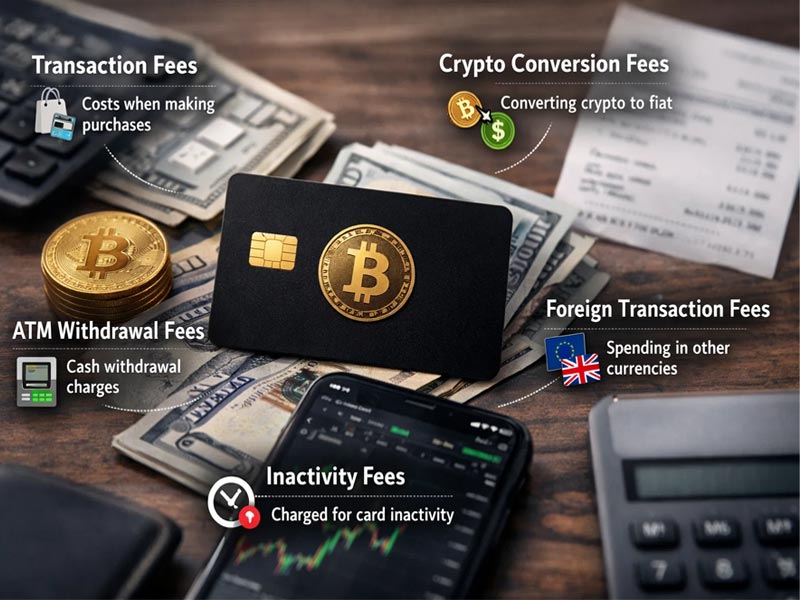
To properly evaluate any crypto card, you need to understand the different types of fees involved. Most users only notice a few of them, but there are several layers:
- Transaction Fees: Charged when making purchases
- Crypto Conversion Fees: Applied when converting crypto into fiat for spending
- ATM Withdrawal Fees: Costs associated with withdrawing cash
- Inactivity Fees: Charged if the card isn’t used over time
- Foreign Transaction Fees: Applied when you spend globally in different currencies
The tricky part is that some of these fees are bundled or hidden within exchange rates. For example, a provider may advertise “zero fees” but apply a less favourable conversion rate, effectively charging you indirectly. Understanding this fee structure is essential before deciding if a crypto card aligns with your financial habits.
Why Some Crypto Cards Advertise Low Fees but Cost More
One of the biggest misconceptions in the market is equating “low advertised fees” with “low real cost.” In practice, many providers rely on pricing structures that look simple but behave differently.
Here’s how that happens:
- Hidden spreads: The exchange rate includes a markup
- Conditional benefits: Low fees apply only if you meet certain requirements
- Tier-based pricing: Better rates are locked behind higher usage or staking
- Limited transparency: Key fee details are buried in terms and conditions
This is why many users eventually ask themselves, is a crypto card worth it, after realizing their actual expenses are higher than expected. A well-designed card should make costs obvious, not something you have to reverse-engineer.
How to Identify a Truly Low-Fee Crypto Card
From a professional evaluation standpoint, identifying a truly low-fee card comes down to a few critical signals:
- Transparent Fee Structure
All costs should be clearly listed and easy to understand. - Competitive Conversion Rates
Look beyond “no fees” and examine the actual rate you receive. - Consistency Across Use Cases
Fees shouldn’t drastically change depending on where or how you spend. - No Hidden Conditions
Avoid cards that require staking or complex conditions to unlock basic benefits. - Balanced Rewards System
Low fees should not come at the expense of value.
A reliable crypto card should make cost efficiency part of its design, not a marketing angle
How Low Fees Impact Your Daily Spending
Low fees aren’t just a financial detail; they directly influence your daily behaviour. When fees are high or unpredictable, users tend to:
- Avoid small transactions
- Convert crypto less frequently
- Lose track of actual spending costs
On the other hand, a low-fee environment encourages:
- More consistent usage
- Better budgeting
- Seamless integration into everyday purchases
Over time, even small differences in fees can compound into significant savings. This is especially true for users who rely on crypto for frequent, real-world transactions.

Low Fees Versus Rewards: Finding the Right Balance
There’s often a trade-off between low fees and rewards, but the best products manage to balance both. Some cards offer attractive cashback or perks, but offset those benefits with higher fees elsewhere. Others minimize fees but provide little incentive to use the card actively.
The ideal solution combines:
- Low, transparent costs
- Meaningful rewards
- A system that scales with usage
Understanding crypto card benefits in this context is essential. Rewards should enhance your spending, not compensate for hidden costs.
Common Mistakes When Choosing a Low-Fee Crypto Card
Even experienced users can make mistakes when evaluating crypto cards. The most common ones include:
- Focusing only on advertised fees
- Ignoring exchange rate differences
- Overvaluing rewards without cost analysis
- Not considering long-term usage patterns
- Choosing complexity over simplicity
A low-fee card should simplify your financial life, not introduce new layers of confusion.
How Topex Keeps Fees Low Without Compromising Value
Topex approaches the concept of low fees differently, by focusing on transparency, usability, and real-world value rather than just marketing numbers. The platform allows users to fund their card with a variety of cryptocurrencies and spend globally with ease. Instead of hiding costs within complicated structures, Topex clearly communicates its fees and rewards, ensuring users always know what to expect.
Beyond cost efficiency, Topex integrates a reward-driven ecosystem:
- Users earn points on every purchase, regardless of category
- Partner merchants offer additional perks such as discounts and bonus rewards
- A tiered loyalty system unlocks better benefits as spending increases
- Points can be redeemed instantly for cashback, travel perks, or other offers
This structure ensures that low fees don’t come at the expense of value. In fact, users benefit from both cost savings and meaningful incentives. Additionally, Topex provides continuous customer support, ensuring that users have access to assistance whenever needed, an often overlooked aspect of financial products.
Who Benefits Most from a Low-Fee Crypto Card
Not everyone uses crypto cards the same way, so the value of low fees depends on your usage pattern. You’ll benefit the most if you:
- Make frequent daily purchases with crypto
- Prefer predictable costs over complex reward systems
- Spend globally and need consistent pricing
- Want to integrate crypto into everyday financial habits
For occasional users, fees might not make a huge difference. But for active users, choosing the right card can significantly impact overall spending efficiency.
Conclusion
A Crypto Card With Low Fees is not just about paying less; it’s about paying smart. The real advantage comes from understanding how fees are structured, how they affect your spending, and how to identify cards that prioritize transparency over marketing. By focusing on total cost, consistency, and real-world usability, you can avoid common pitfalls and choose a solution that genuinely saves you money. Platforms like Topex demonstrate that it’s possible to combine low fees with strong rewards and a seamless user experience. And in a market full of noise, that balance is what truly sets a crypto card apart.
FAQ
Can I use a low-fee crypto card for online subscriptions and recurring payments?
Yes, most low-fee crypto debit cards support online and recurring transactions. It’s important to check that the card doesn’t charge hidden fees on subscription payments or automatic renewals.
Are low-fee crypto cards safe for everyday spending?
Absolutely. Trusted, low-fee crypto cards, such as Topex, offer secure spending, clear transaction records, fraud protection, and customer support, making them suitable for daily use like a traditional debit card.
Can I earn rewards while using a low-fee crypto card?
Yes! Some low-fee crypto cards, such as Topex, combine cost efficiency with rewards. You can earn points or cashback on every purchase without having to pay high fees, making your spending more beneficial.